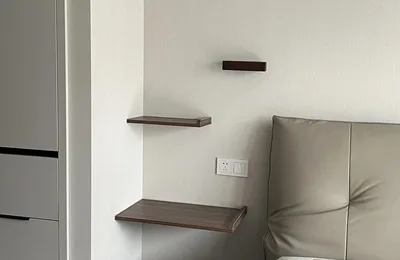
Malaysia’s climate makes bedside cabinet sourcing more than a style decision. Humidity, air-conditioning cycles and apartment delivery conditions can affect edges, hardware, cartons and long-term appearance.
A smart bedside cabinet with LED lighting or a glossy top may be attractive for apartments and hotel rooms, but the buyer should also ask how panel edges are sealed, how metal hardware is protected, and how cartons are packed for sea freight and local storage.
Focus on edges and hidden details
Visible surfaces are easy to judge in photos. The more useful inspection is often on the edges, drawer gaps, back panel, feet and screw positions. These areas show whether the product is ready for humid environments and repeated handling.

Moisture-aware details to specify
- Consistent edge banding on front, side and bottom panels
- Hardware with suitable anti-rust protection for drawer rails and screws
- Cartons with corner protection and moisture-control packing where needed
- Clear care notes for glossy tops, LED areas and charging surfaces
- Sample approval after storage and basic cleaning checks
For hotel and apartment buyers, maintenance teams need products that can be cleaned quickly without damaging the finish. A smooth surface, stable drawer action and replaceable small parts matter more over time than decorative complexity.
The safest first order is one that tests both the cabinet and the packed unit. Open, inspect, clean and re-pack the sample before confirming the final carton method for Malaysia.
Make climate and handling checks part of sample approval
For a humid-market sample, inspect more than colour. Check the edging at corners, the underside near the floor, drawer movement after repeated opening and the way the carton protects exposed panels. Record the approved material and hardware combination before an order is priced through a Malaysia furniture wholesale programme.
A useful receiving checklist separates surface marks caused before packing from moisture, storage or local handling issues. That gives a retailer or project buyer a fair basis for deciding whether the solution is a carton revision, a finish change or a different product construction. Compact functional models can be compared through smart nightstands in Malaysia.
For repeat orders, keep one approved reference unit and photograph the edge banding, handles, feet and internal fittings. The record is especially useful when a brand asks for a finish update while retaining the same cabinet platform. It should sit alongside the private-label bedroom furniture specification.
Approve the sample after realistic handling checks
A useful humid-market sample review does not need to simulate every possible condition. It should, however, include a repeatable handling routine: inspect the cabinet after unpacking, open the drawers several times, look at the underside and edge banding, wipe the visible surface with the intended care method, and pack the unit again using the proposed carton materials. The result gives the buyer a practical reference for what has actually been approved, rather than relying on a showroom photograph or a material name alone.
The inspection record should distinguish panel construction, edge treatment, drawer hardware, feet and electrical accessories. When a later concern arises, that separation helps identify whether the issue is linked to a finish, a fitting, the carton method or local storage. It is also useful when a buyer wants to compare a standard bedside cabinet with a smart version without assuming that the same care and replacement steps apply to both.
Make the receiving checklist specific enough to act on
At goods receipt, a retailer, distributor or project team can photograph the outer carton, corner protection and any visible mark before signing the product into stock. Record the model, finish and carton version with the observation. This creates usable feedback for a repeat order: a protection adjustment can be requested where transport is the issue, while a material or hardware question can be reviewed separately. The goal is not to claim that one specification suits every location, but to maintain a clear approved combination for the Malaysian sales route.
Climate-aware sourcing works best when the sample, carton and receiving record are treated as one decision. That keeps future orders consistent and gives the buyer a factual basis for changing only the part of the programme that needs improvement.
Review the exposed edges and moving parts together
Humidity does not make every bedroom cabinet unsuitable, but it makes a disciplined material and packaging review more important. Malaysian buyers should inspect the sample’s edge treatment, back panel, drawer front, base and hardware rather than judging only the visible top surface. The question is whether joints are clean, surfaces are consistently sealed, drawers remain aligned and metal parts are appropriate for the intended indoor setting. The approved finish should be viewed in normal room conditions and after routine cleaning, because a small weakness at an edge or joint can become more visible during repeated use.
Packaging also matters because the product may move through ports, warehouses and local delivery before it reaches a bedroom. The carton should keep panels, corners and loose hardware separated, while allowing the buyer to identify the model and finish without opening every box. A packed sample is the right place to check whether a drawer can move in transit, whether a top surface rubs against fittings and whether protective material is positioned where the cabinet is actually vulnerable. Strong packaging is not simply more material; it is protection matched to the cabinet’s structure.
Keep a repeatable sample record
For a replenishment programme, retain photographs of the approved surface, close-ups of edge treatment, hardware references, carton layout and the product label. This record helps distinguish a planned change from an unintended variation in a later order. It also supports a more useful conversation about service parts: feet, runners, handles and a charging module may have different replacement needs and should not be treated as one generic spare-parts list.
- Inspect edge treatment, base, back panel and drawer alignment on the physical sample
- Check that hardware and electrical components are clearly identified
- Open a production-intended carton and review corner, surface and fittings protection
- Photograph the approved finish and carton layout for repeat orders
- Separate service planning for feet, runners, handles and smart modules
The aim is a cabinet that looks consistent when it is unpacked, remains easy to maintain and can be reordered without uncertain assumptions about finish or construction. A buyer who approves both the assembled item and the packed version is better placed to protect retail presentation, project delivery and after-sales support.